
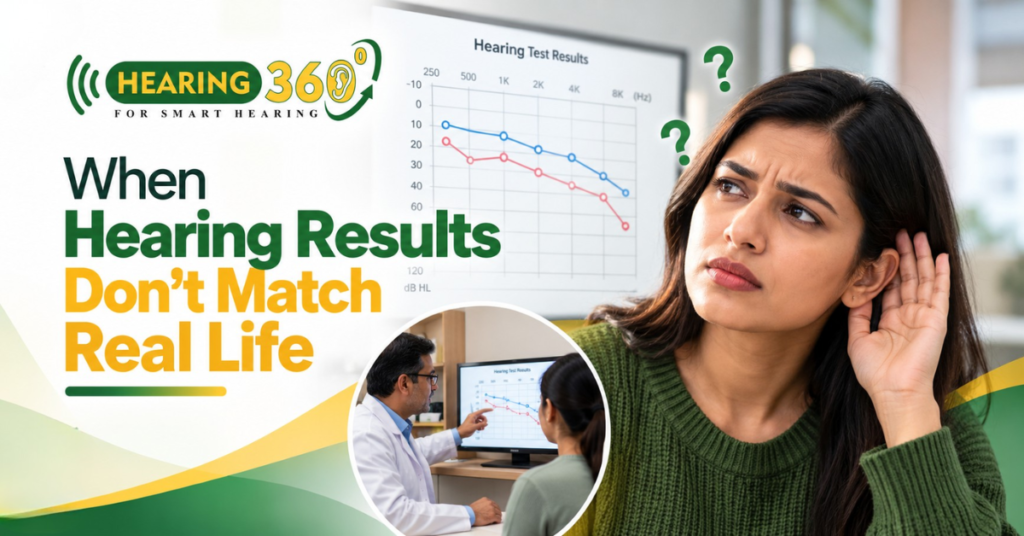
Your audiometry test report says your hearing falls within a normal range, yet you still ask people to repeat themselves at dinner. This isn’t as contradictory as it sounds.
A test result can look fine on paper while your everyday listening experience tells a different story, and understanding why can save you from dismissing a real problem.
An audiometry test measures how well you detect specific tones at different pitches and volumes, usually inside a quiet, controlled booth.
Everyday listening, on the other hand, involves following speech across a noisy room, picking out one voice among several, or catching words spoken quickly.
These are related skills, but they’re not identical. This article breaks down why the two don’t always line up, what factors can explain the gap, and when it’s worth asking for a closer look.
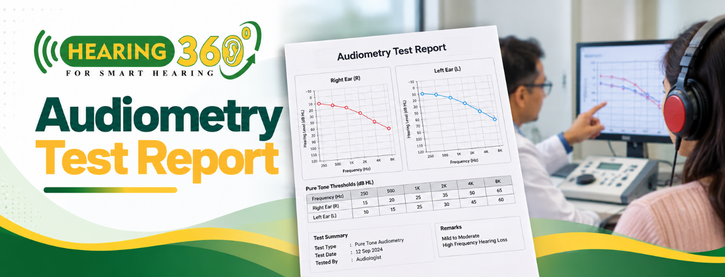
Why an Audiometry Test Report May Not Tell the Whole Story
Can you have hearing difficulty with a normal audiometry test? Yes. Pure-tone audiometry checks whether you can detect tones at specific frequencies and volumes, which measures hearing sensitivity, not speech understanding.
Someone can register normal thresholds and still struggle to follow conversation, especially in noisy or multi-speaker settings.
A few reasons this gap shows up:
- Detecting a beep in silence uses different listening skills than following speech in a busy restaurant, meeting, or family gathering.
- Frequency-specific hearing changes can affect clarity of certain sounds, like consonants, without pulling overall thresholds outside the normal range.
- Speech understanding depends on more than volume. It involves processing, timing, and separating speech from background noise.
- Some difficulties only appear in real-world conditions that a quiet test booth doesn’t replicate.
None of this means the test missed something. It means the test answered one specific question, and your everyday listening experience is asking a broader one.
If your reported difficulties don’t match your results, that mismatch is worth raising directly with your audiologist rather than assuming either the test or your own experience is wrong.
What Can Make Your Hearing Test and Everyday Experience Seem Different?
An audiometry test report reflects a specific moment, under specific conditions, using a specific method.
Several factors can create a gap between that report and how you actually experience sound day to day.
Testing conditions are different from real life. A soundproof booth removes the background noise, competing voices and echoes. Real work environments usually do not offer that. A result generated in a quiet environment cannot usually predict how you can perform in the crowded environment/
Pure-tone testing relies on your responses. You indicate when you hear a tone, which means the result depends partly on attention, fatigue, and how consistently you respond during the session. This isn’t a flaw in the method, but it’s a factor worth knowing about.
Temporary conditions can affect results on test day. Congestion, a lingering cold, or middle-ear pressure changes can all shift how you hear at that specific moment, even if they resolve afterward.
Tone detection and speech understanding are different skills. You can hear a tone clearly and still find it hard to separate one voice from another, especially with overlapping speech or background chatter.
Listening environment changes the difficulty level. Distance from the speaker, room acoustics, multiple talkers, and background noise all affect real-world listening in ways a basic test doesn’t capture.
Why can I hear the test tones but still struggle with conversations?
Tone detection confirms that your ear is able to register sound at particular frequencies and sound levels. Conversation adds speed, overlap of speech, and background sound — a pure-tone test can evaluate none of these.
Struggling with just one and passing another is not really contradictory.
An unexpected result doesn’t mean the audiometry test was wrong. It means the result needs to be read alongside your actual symptoms, not treated as the final word on its own.
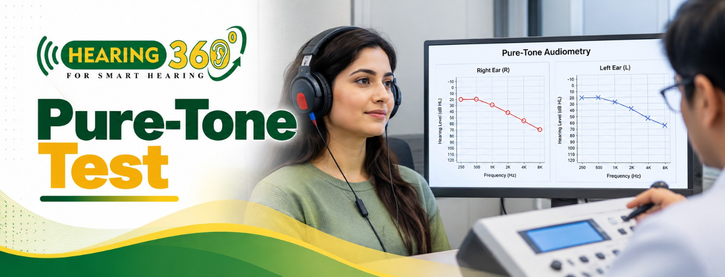
When Your Audiometry Test Report May Need a Closer Look
Certain patterns suggest it’s worth revisiting your results rather than accepting them at face value:
- Persistent difficulty understanding speech despite a normal or reassuring audiometry test report
- Repeated struggles hearing clearly in noisy environments, even when one-on-one conversations feel fine
- A noticeable difference in how well you hear with one ear compared to the other
- Ongoing symptoms like ear fullness or pressure alongside your hearing complaints
- A sense that your hearing has changed, even if your last test result looked stable
Repeating the same test isn’t always the most useful next step. If the concern is speech understanding rather than tone detection, a broader assessment makes more sense.
This may include speech audiometry that checks how well you understand the words instead of just detecting sounds, or impedance audiometry, which investigates middle-ear function and identifies issues that a pure-tone test alone cannot.
What should you do if your hearing test is normal but you still cannot hear properly? Discuss specific situations where you struggle, not only the fact that something doesn’t feel right.
Consider and note the background noise, group environments and particular sounds and voices which are hard to follow.
These details help guide which tests, if any, work in your case.
What other tests can be done after an audiometry test? Depending on your symptoms, additional options include speech audiometry, impedance audiometry, or tympanometry to assess middle-ear function.
The right combination depends on what you’re experiencing, not a fixed checklist applied to everyone.
Don’t judge a hearing concern only by whether one number on a report looks “normal.” Discuss the mismatch between your test result and your actual listening experience with a professional who can interpret both together.
So the evaluation matches what you’re actually experiencing rather than stopping at a single test result.
If the audiometry test report does not match your hearing condition, the gap is something that’s worth raising instead of setting it aside.
Book a broader hearing evaluation and describe particular listening challenges in detail, so any follow-up is aimed at the real problem instead of repeating the same actions or measurements.
At Hearing 360 Degree, this kind of follow-up sits within a wider diagnostic pathway that includes speech audiometry, impedance audiometry, and other middle-ear assessments alongside standard pure-tone testing.
Are you looking for the right audiometry test report? Check out Hearing 360 Degree‘s range of services and select the test as per your doctor’s recommendation that matches your situation.
FAQs
- Can an audiometry test be wrong?
The test itself is a reliable measure of hearing thresholds, but results depend on testing conditions, patient responses, and temporary factors like congestion. A result that seems inconsistent with your symptoms usually calls for more context, not a re-test alone. - Why do I hear fine in quiet but struggle in noisy places?
This is common and often relates to how your brain separates speech from background noise, which pure-tone testing doesn’t measure. It’s a different listening skill than detecting isolated tones. - How often should I get an audiometry test?
This depends on age, symptoms, and risk factors like noise exposure. Someone with no complaints may only need periodic checks, while ongoing symptoms usually warrant more frequent evaluation. - Does a normal audiometry test rule out hearing problems?
Not entirely. It rules out certain types of hearing loss related to tone detection but doesn’t address speech understanding, auditory processing, or middle-ear function issues that require separate tests.
[…] Audiometry Test Report: Why Your Test Result and Your Hearing Experience May Not Match […]