
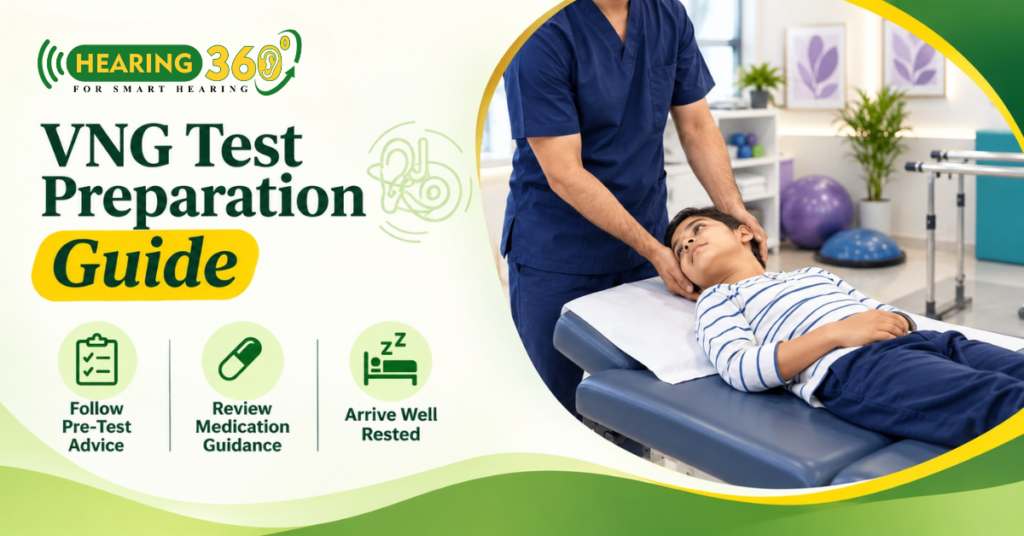
The room tilts when you roll over in bed. Your doctor hears this and suggests a VNG ear test.
A little preparation makes the visit smoother and the recordings more useful. Many people also check the cost of a videonystagmography test before booking.
With 0.3% of the population suffering from hearing disability in India.
This guide covers what to avoid, what to carry, what to expect on the day, and how to choose a centre in Kolkata.
Rules differ between clinics, so always follow your own centre’s instructions.
What to Avoid Before Your VNG Ear Test
Before a VNG test, you may need to avoid certain medicines, caffeine, alcohol, heavy meals and eye makeup.
These can change eye movements or make recordings harder to read. Exact rules differ by clinic.
Ask your testing centre for its list, and never stop a prescribed medicine on your own.
Some medicines need a review
Certain medicines can dull balance responses and alertness.
Your audiologist or doctor may ask you to pause some of them before testing. Common examples include:
- Anti-vertigo tablets
- Anti-nausea medicines
- Sedatives and sleeping pills
- Some allergy medicines
- Certain medicines for anxiety or pain
Share a full list of your prescription and over-the-counter medicines.
Let the doctor decide what to pause. Never stop or change a dose on your own.
Caffeine
Caffeine can change alertness and nervous system responses.
Think beyond coffee. Tea, energy drinks, cola and chocolate count too.
A few centres allow you to skip caffeine for about 24 hours. Confirm the window before you book.
Alcohol
Alcohol can affect balance and coordination. It can also mimic symptoms the test is trying to investigate.
Some clinics ask you to avoid it for 24 to 48 hours.
Others give different advice. Ask before the day arrives.
Heavy meals
The caloric stage can cause brief nausea. A heavy meal makes that worse. Some centres suggest a light meal.
Others ask you to avoid food for a set period. Both are valid.
Follow the instructions you are given.
Eye makeup and contact lenses
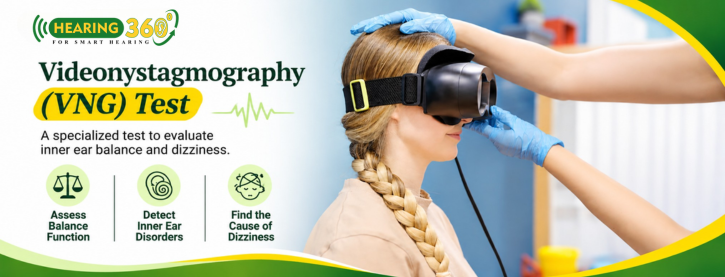
VNG goggles use infrared cameras to track your eyes.
Eyeliner and mascara can interfere with the recording.
Skip eye makeup on the test day. Ask whether you should wear glasses instead of contact lenses.
Smoking and recent illness
Some protocols also ask patients to avoid smoking before testing.
Check with your clinic. Call the centre before your visit if you have:
- Fever or an infection
- Severe nausea or vomiting
- Ear discharge or pain
- A sudden change in your dizziness
- A new medicine
The clinician can then decide whether to go ahead or reschedule.
How to Prepare the Day Before and What to Expect
Why doctors recommend this test
Doctors suggest VNG when dizziness keeps returning or has no clear cause.
It also helps when you feel unsteady while walking, or when symptoms worsen with head movement.
The recordings show how your eyes, inner ears and brain work together to keep you balanced.
Results can point towards conditions such as BPPV, Ménière’s disease, labyrinthitis or vestibular neuritis.
They cannot confirm every cause on their own. Your doctor will also weigh your history and other tests.
Your day-before checklist
Keep it simple. Work through these steps:
- Call the centre and confirm the preparation rules.
- Ask about the videonystagmography test cost, the appointment length and when the report will be ready.
- Write down every medicine you take, with doses.
- Gather old ENT, hearing or balance reports.
- Note how often you feel dizzy and what triggers it.
- Plan comfortable clothes that let you move your head and body easily.
- Arrange for someone to travel with you.
- Sleep normally. Avoid hard exercise or long, tiring days.
On the day, carry your doctor’s note, your medicine list, old reports and your glasses.
Reach the centre a few minutes early. Rushing can leave you flustered and more dizzy.
What happens during a VNG ear test
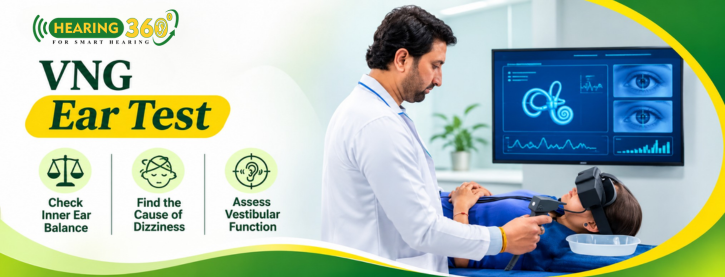
The VNG test procedure has three parts. You wear light goggles with built-in cameras.
The audiologist guides you through each step.
- Ocular testing: You follow moving lights with your eyes. Your head stays still. This checks how well your eyes track and respond.
- Positional testing: You turn your head and move between sitting and lying positions. The team watches for involuntary eye movements. These can point to problems such as BPPV.
- Caloric testing: Each ear is tested separately. The doctor delivers warm and cool air or water into the ear canal. The eye response shows how well each inner ear works.
Most appointments run 30 to 60 minutes.
The length depends on how many parts your doctor ordered.
Does it hurt?
No. The test is non-invasive and painless. You may feel brief dizziness, mild nausea or a little discomfort when you change position.
Caloric testing is the most likely trigger. These effects usually settle within minutes.
Tell the audiologist if you feel unwell. They can pause the test.
Many patients feel nervous before testing. That is normal.
Knowing the steps in advance usually helps.
What to do after the test
You can usually return to normal activity once you feel steady. Until then:
- Rest if you feel dizzy or queasy.
- Do not drive until you feel safe.
- Follow any advice on food or medicines.
- Attend your follow-up visit so the doctor can read the report with your history.
Contact your doctor if dizziness worsens, vomiting is severe, you notice new symptoms, or your balance does not settle.
With 63 million people experiencing some hearing difficulty, it is important to consider these factors to avoid problems.
Depending on the findings, the doctor may suggest further tests such as ENG, VEMP or vHIT.
Some patients are referred for vestibular rehabilitation therapy.
How to Choose a VNG Test Centre in Kolkata
Price matters, but it should not be your only filter.
Two centres can quote similar fees and offer very different experiences. Look at these points:
- Equipment: Ask whether the centre performs full videonystagmography with infrared goggles. Confirm that all three stages are available.
- Who tests and reads: Check that a trained audiologist runs the test. Find out who interprets the findings, and whether you can discuss them in person.
- Process: Ask how long the visit takes and when you will receive the report.
- Follow-up care: See whether the centre offers related tests, vestibular rehabilitation or referrals to ENT and neuro-otology.
A good centre answers these questions clearly. It also tells you what to avoid before testing, even if you don’t ask.
Be wary of vague answers. If a centre cannot say which stages it performs, ask again.
Bring a short list of questions. A clear reply on preparation, duration and reporting is a good sign.
Preparation shapes your experience. Review medicines with your doctor. Follow the food and caffeine instructions.
Skip alcohol and eye makeup if advised. Arrive with your records and a companion.
A well-prepared VNG ear test visit helps the audiologist get clear results and helps you feel calmer.
When you compare centres, ask about the cost of the videonystagmography test, along with equipment, expertise and follow-up care.
Living with dizziness or balance problems in Kolkata? Hearing 360 Degree in Garia offers VNG, ENG, VEMP and vestibular rehabilitation therapy, along with hearing assessments.
Speak with the team to see whether VNG testing suits your symptoms, and book an appointment.