
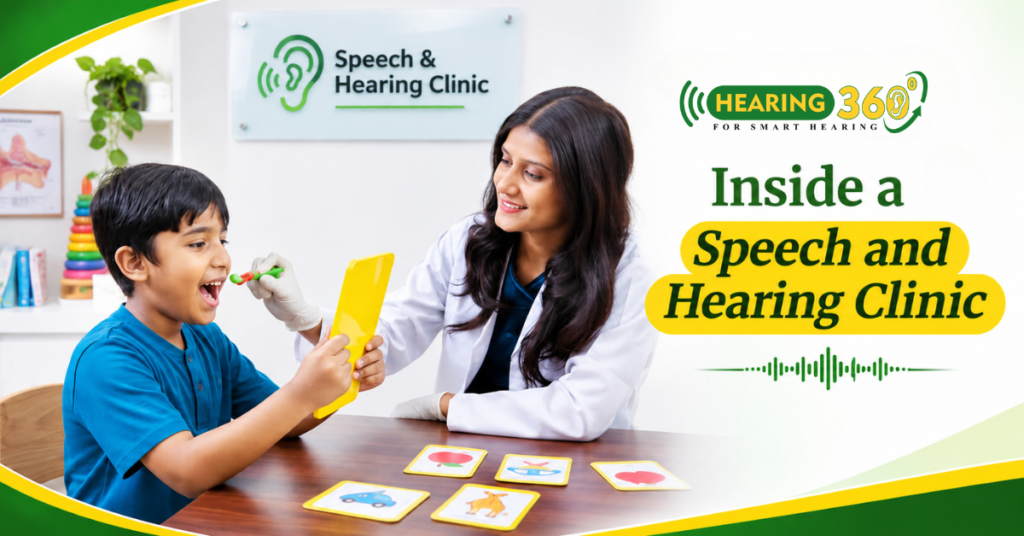
Turning up the TV one notch at a time feels harmless. Many people reach the point of searching for a care speech and hearing clinic without knowing what happens inside.
With 63 million Indians suffering from hearing impairment, the need for dedicated clinics and treatment is unquestionable.
The increasing hearing and speech problems in the country have pushed them to improve services and treatments.
This guide walks you through the full visit, from first consultation to follow-up. You will see the tests, the speech therapy process, the hearing aid steps and how to prepare.
What to Expect at a Care Speech and Hearing Clinic
A speech and hearing clinic assesses hearing, speech, language and voice. Some clinics also test balance.
They see infants, children, adults and older people. Services vary by clinic, so check what each one offers.
When should you book a visit?
Book a test if you observe these:
Hearing:
- Crowded rooms make conversation hard
- Ask people to repeat themselves
- You raise phone or TV volume
- Phone calls are difficult to follow
- You hear buzzing or ringing
- People often mumble
Speech and communication:
- Trouble finding words or understanding language
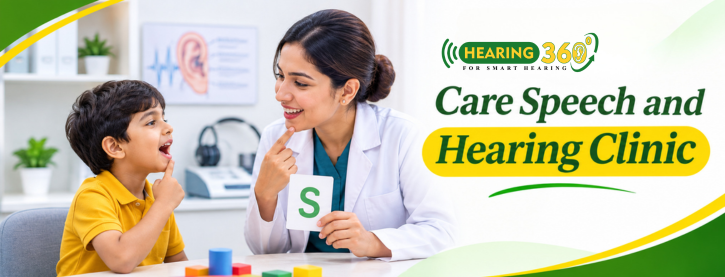
- Child’s speech or language is slower than expected
- Stammering sounds
- Certain sounds remain unclear
- Speech or voice changes after a stroke
- Hoarseness that does not go away
These signs do not confirm a condition. An assessment finds the cause.
Sudden hearing loss, especially in one ear, needs urgent medical evaluation. Do not wait for a routine appointment.
Your first visit, step by step
More than 1708 clinics across India follow necessary standards. Your job is to check these before booking an appointment.
- Consultation. The audiologist or therapist asks about your symptoms, when they started, your medical history and any family history. They ask about loud-noise exposure and daily communication needs. For a child, they ask about milestones and responses to sound.
- Ear examination. The specialist looks at the outer ear and ear canal. Earwax or visible problems may need attention first. They may suggest an ENT consultation if findings point to a medical ear condition.
- Tests. The specialist picks tests based on age, symptoms and early findings. Nobody needs every test.
- Results discussion. You hear what the results mean. Options may include more testing, hearing aids, speech therapy, balance rehabilitation or a medical referral.
Ask about findings, next steps, follow-up visits and costs before you leave.
What to bring
- A note of your symptoms and when they began
- Earlier hearing reports, prescriptions or medical records
- A list of medicines and medical conditions
- Any history of ear infections, injuries or loud-noise exposure
- Your current hearing aids, if you use them
- School or developmental reports, for a child
- Your questions
Some tests need specific preparation. Ask the clinic when you book.
Hearing, Balance and Speech Tests Explained
The inner ear also controls balance. Some clinics test for dizziness and vertigo. 291 people per lakh population suffer from hearing problems and need to be tested.
Common hearing tests
Each test answers a different question. Here is what the main ones do.
| Test | What it checks | What you experience |
| Pure tone audiometry | The softest sounds you hear at different pitches | You wear headphones and respond to tones |
| Speech audiometry | How well you hear and understand words | You repeat words played at different volumes |
| Tympanometry (impedance) | Middle-ear function and eardrum movement | A small probe sits at the ear canal entrance |
| OAE | Inner-ear (cochlea) response | A small earphone plays sounds. No response needed |
| BERA/ABR | Nerve and brainstem response to sound | Electrodes on the head. You stay still |
A good care speech and hearing clinic matches tests to the person. Pure tone audiometry suits adults and older children who can respond reliably.
OAE and BERA suit infants, young children and anyone who cannot respond during standard tests.
An abnormal OAE result does not confirm hearing loss. It means further testing.
Specialists may add tests for specific concerns. These include Eustachian tube function, SISI, tone decay and electrocochleography.
Your audiologist decides whether you need any of them.
Balance and vertigo tests
- VNG records eye movements through video goggles.
- ENG records eye movements through electrodes around the eyes.
- VEMP uses sound to measure muscle responses linked to balance pathways.
- Electrocochleography records inner-ear activity. Specialists may use it when they suspect Ménière’s disease. It is not routine for every dizzy patient.
Treatment may include vestibular rehabilitation. This is a personalised exercise programme.
It may include gaze exercises, balance training and habituation work.
The exercises and duration depend on the diagnosis and your response.
What happens in a speech therapy assessment
The therapist starts with your communication history.
For a child, that covers first words, sentence growth, following instructions, play with other children and any past hearing tests.
For an adult, it covers changes after illness, injury or a neurological condition.
The therapist then evaluates:
- Speech clarity: how clearly you form sounds and words
- Language: understanding and expressing ideas
- Fluency: the flow of speech, including stammering
- Voice: pitch, loudness and hoarseness
- Daily communication: how you use language in real scenarios
Finding makes the individual therapy plan.
Goals can include clear pronunciation, language development, improved fluency, healthy voice use or communication improvement post-stroke.
Sessions include structured exercises, guided activities and home practice. The therapist reviews progress regularly and involves the family.
Parents can help in simple ways. Join sessions when advised.
Practice the home activities. Give your child time to finish sentences.
Talk through play, reading and daily routines.
Hearing Aids, Age-Specific Care and Choosing a Clinic
Hearing aid selection, fitting and follow-up
Hearing aids help many people hear more clearly. They do not restore normal hearing.
Your test results, lifestyle, comfort needs, budget and wish for features like rechargeable batteries or phone connectivity all shape the choice.
The process runs like this:
- Recommendation. The audiologist matches device style and technology to your hearing profile.
- Trial. Where available, try more than one model. Test them in quiet talk, noisy rooms, TV and phone calls.
- Fitting and programming. The audiologist checks fit and comfort, then programs the device to your hearing. Report whistling, discomfort or unclear speech right away.
- Training. You learn to insert and remove the device, switch it on and off, charge or change batteries, clean it and pair it with a phone.
- Follow-up. You may need more visits to adjust settings after real-life use. Do not change settings yourself.
Care for babies, children and adults
Babies. Early screening protects speech and language development. OAE and ABR are common methods, and babies can often sleep through them.
A baby who does not pass a first screen needs timely follow-up. That does not confirm hearing loss.
Children. See a specialist if your child responds inconsistently to sound, struggles with instructions, or speaks unclearly.
Hearing tests and speech therapy often work together.
Adults and seniors. Common reasons include trouble following conversations, ringing in the ears and gradual hearing change.
Involve family members, especially when an older person needs help managing hearing devices.
How to choose a clinic
Compare these four points when you evaluate any care speech and hearing clinic:
- Qualifications. Look for trained audiologists and speech-language professionals. Check registrations. Ask about experience with your concern, especially for children or complex cases.
- Facilities. Ask whether the tests you need happen on site or require a referral. Ask about the testing room and equipment calibration.
- Follow-up. Check for post-assessment counselling, hearing aid trials and servicing. For therapy, ask how progress is reviewed and how families take part.
- Costs. Confirm fees before booking. Ask whether the consultation fee includes tests. You do not need every test on day one.
Many people also search for a hearing care clinic in their own area. Use the same checklist.
A visit to a care speech and hearing clinic follows a clear path. You discuss your concerns, take the right tests, understand the results and start treatment or therapy.
Preparing in advance makes the visit more useful.
If you live in Kolkata, check out Hearing 360 Degree and their offers like audiological assessments, vestibular testing, speech therapy and hearing aid support.
FAQs
- What services does a speech and hearing clinic provide?
It may provide hearing assessments, speech and language evaluations, hearing aid selection and fitting, speech therapy and balance tests. Services depend on the clinic, so confirm before you book. - What happens during the first visit to a hearing clinic?
You discuss your symptoms and medical history. The specialist examines your ears and recommends suitable tests. They then explain the findings and next steps. - Is a hearing test painful?
Routine tests such as pure tone audiometry, speech audiometry, OAE and tympanometry are non-invasive and generally painless. Some involve mild pressure or require you to stay still. - When should a child see a speech therapist?
Consider an assessment if you worry about your child’s speech clarity, language growth, fluency or ability to communicate. Early assessment helps identify support needs. - Do hearing aids cure hearing loss?
No. Hearing aids help many people hear sounds more clearly, but they do not restore normal hearing. Suitability depends on your assessment and the audiologist’s recommendation. - Do speech and hearing clinics treat vertigo?
Some do. They offer vestibular tests and rehabilitation for certain balance problems. If you have dizziness, an evaluation will show which care you need.