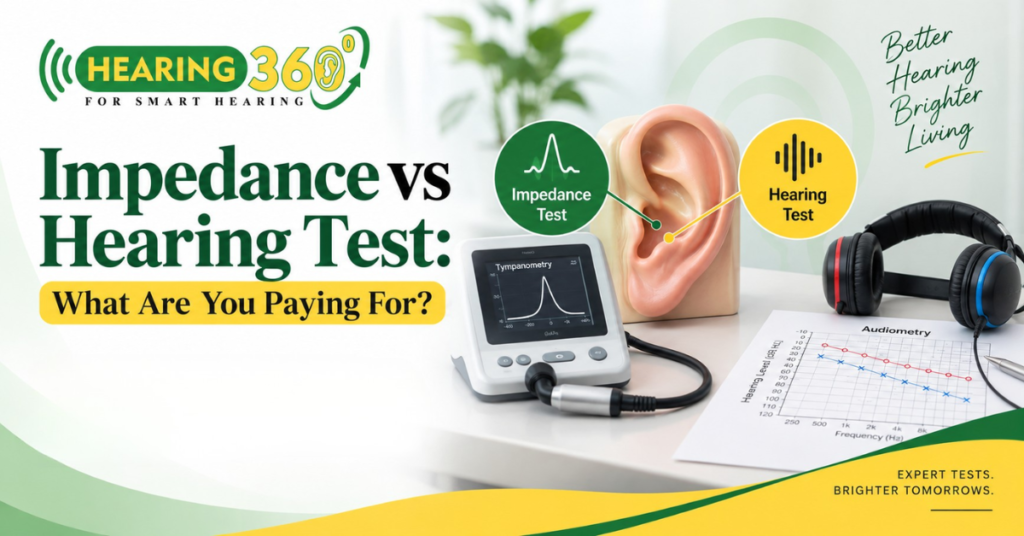
You go for a hearing test, and the audiologist prescribed impedance audiometry too. Now there’s a second number on the bill, and you’re wondering why. This is where most people first run into the impedance audiometry test price question — not out of curiosity, but out of confusion at the counter.
Hearing test and impedance audiometry — they don’t follow the same procedure. These answer different questions about your ears.
So, while comparing two clinics on just the price, you can be comparing two separate services without thinking about it.
The blog explores each test, what they measure, their quoted price, and how to find the right deal instead of a cheaper one.
Impedance Audiometry vs. Hearing Test: Assessing Different Things
A typical hearing test is pure-tone audiometry. Your response to sound with headphones, at different volumes and pitches, is measured carefully. The audiologist checks the hearing thresholds and the lowest level sounds you can detect at each frequency.
This shows if you have hearing loss and, if so, how severe. This is the beginning of most complaints — starting from age-related hearing issues to high noise exposure.
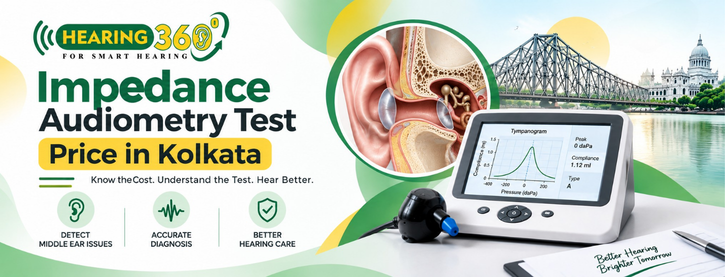
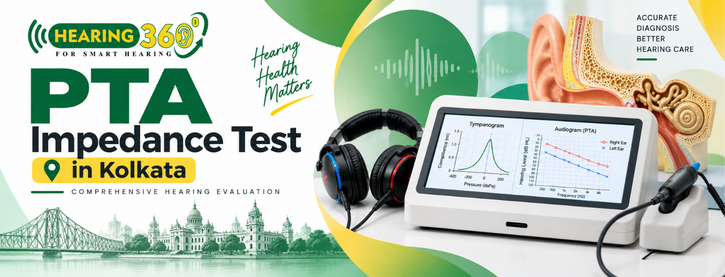
Impedance audiometry or Tympanometry is different as it checks how your middle ear has been functioning, if your eardrum moves well, if the pressure feels normal and if there’s fluid build up.
It doesn’t tell you how well you hear; it tells you whether the mechanics of your ear are working the way they should. A patient can have a completely normal audiogram and still have an abnormal tympanogram, or the reverse.
This is why one person gets prescribed the pure tone test and the other needs both:
- Recurrent infections in the ear or a history of glue ear demand a tympanogram along with the basic test
- A blocked feeling in the ear points to a middle-ear issue, where impedance audiometry is relevant
- Problems following normal conversations, particularly in elderly people, usually begin with pure-tone audiometry alone
None of it needs to be decided by which tests cost less.
There is a reason this distinction is important. The complaint needs to point at the test and not just the price tag.
Pure tone audiometry and tympanometry use different calibration checks, machines, and skills to interpret accurately.
A pure tone test relies on your subjective response to sound; you press a button when you hear a beep.
Impedance audiometry doesn’t depend on your response at all; it measures a physical reflex in the ear, which is why it’s also used on infants and people who can’t reliably respond to sound cues.
That difference in method is part of why the two are priced and performed separately rather than folded into one flat “hearing test” fee.
Impedance Audiometry Test Price vs Hearing Test Cost: What’s Included
Here’s a fair way to think about it: the impedance audiometry test price you’re quoted isn’t just for five minutes with a probe in your ear.
It reflects a few things bundled together, and those things vary a lot between clinics.
What typically goes into the fee:
- Calibrated, ISO-standard equipment; accuracy depends on this
- The audiologist’s time to administer and supervise the test
- A detailed report, particularly for ENT reference
- Tympanogram interpretation and not another printout
This is why two separate quotes for hearing tests from different places may look completely different. A single clinic may combine pure tone, speech, and impedance audiometry in one quote.
Another person may quote for each test, so what seems like a low hearing test cost can exclude impedance audiometry completely. This means you have to pay again later.
Diagnostic labs may give and expect you to get checked by a doctor.
The right audiology clinic, however, includes interpretation and recommendations on what to do next as part of the visit.
Before you compare prices, ask:
- Which tests does this cover among impedance, pure tone, speech or all of them?
- Do I get a written report, and who interprets it?
- Is a consultation with the audiologist included, or only the test itself?
- What are the costs if further tests are recommended?
Asking these questions in the beginning saves you from unplanned bills.
There’s another thing that usually doesn’t show up in the quote. But this affects what you get and who is conducting the test.
An RCI-registered audiologist should read the results after a proper test run. They offer a higher level of clinical judgement than one run by technicians.
This doesn’t necessarily mean the more affordable option is wrong. Often the straightforward screening is what you need.
But if the particular case involves recurring symptoms, an ENT referral or a decision about hearing aids, the individual interpreting the result is more important than the test itself.
When Comparing Prices Shouldn’t Be Your Only Priority
Price matters, but it shouldn’t be the first filter. The first filter should be: does this test actually address what’s bothering me?
If your concern is a blocked-ear sensation and you only get pure tone audiometry because it was cheaper, you may not get an answer at all — because that test isn’t built to detect a middle-ear problem.
In cases involving both hearing loss symptoms and a possible middle-ear issue, combining pure tone audiometry with impedance audiometry tends to give a more complete picture than either test alone. This isn’t about paying more for the sake of it; it’s about the tests matching the actual clinical question.
There is a step most people skip — closely observing and understanding the results. A simple printout of the tympanogram or an audiogram chart doesn’t mean much on its own for most patients. The numbers are less important than what they mean and what happens next.
This is where the interpretation of the audiologist, and not only the machine’s output, becomes part of what you actually pay for.
A test without the right interpretation is closer to a data point than a diagnosis.
Depending on the symptom, an audiologist may also bring up:
- Pure tone audiometry, if it wasn’t already done
- Speech audiometry, when understanding speech in noise is the concern
- Eustachian tube function testing, for pressure-related symptoms
- OAE testing, in specific cases such as newborn or pediatric screening
None of these are automatic add-ons for everyone. They’re situational, and a good clinic will explain why one is being suggested rather than bundling it in by default.
If an audiologist recommends an additional test after your first visit, ask what specific symptom or finding prompted it — a clear answer usually means the recommendation is based on your results, not on upselling.
The Real Comparison Starts Before the Price
The rightly quoted hearing test cost and an impedance audiometry test price may look like they have the same goal — but they don’t.
While one measures your hearing ability, the other measures how well the middle ear works.
Once you know which test you need, comparing prices becomes even more useful as you compare beyond the numbers in a bill.
Before booking anything, it’s important you have a small conversation with an expert audiologist about the symptoms and what they indicate. The proper hearing evaluation with the right test, clear report, and someone to explain what it means matters more than one with the lowest number.
If you’re looking for Impedance Audiometry test price in Kolkata, explore the services of Hearing 360 Degree and opt for the one that your doctor prescribes.
FAQs
- Is impedance audiometry the same as a hearing test?
No. A hearing test, usually pure tone audiometry, measures how well you detect sound at different frequencies. Impedance audiometry checks middle-ear function — eardrum movement and pressure, not your hearing sensitivity itself.
- Why does impedance audiometry cost differently from pure tone audiometry?
The two tests use different equipment and assess different parts of the ear. Pricing also depends on whether interpretation, a written report, or a consultation is bundled into the fee, which varies by clinic.
- What does impedance audiometry actually test for?
It checks how the eardrum moves in response to air pressure, detects fluid behind the eardrum, and helps identify conditions like glue ear, eustachian tube dysfunction, or a perforated eardrum.
- Do I need both a hearing test and impedance audiometry?
Not always. It depends on your symptoms. Blocked-ear sensations or recurrent infections often call for both; straightforward hearing difficulty may only need pure tone audiometry initially.
[…] tests: VEMP, hearing tests, vHIT, imaging, or posturography when there’s a clinical need for […]