
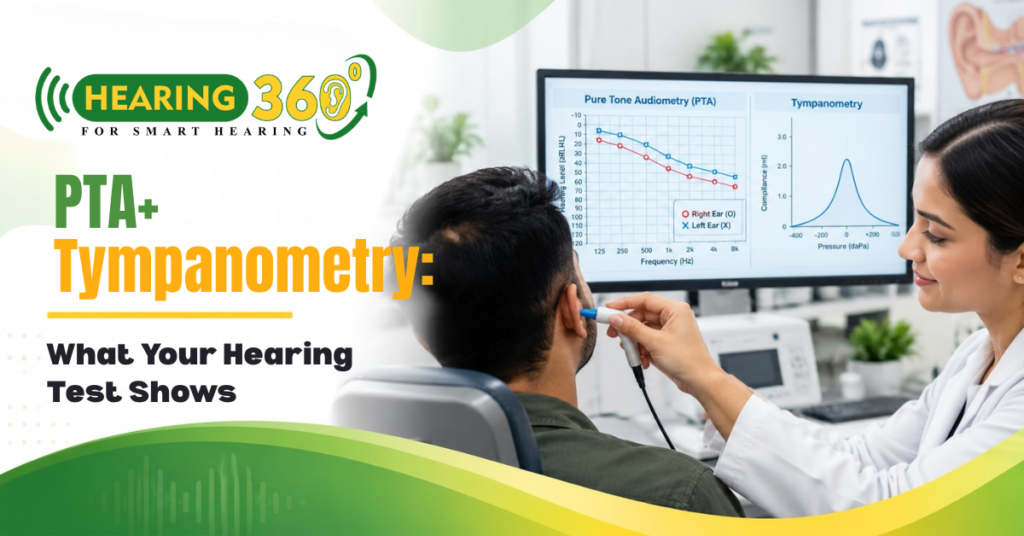
Your ear feels blocked, and the clinic suggests two tests instead of one. Before you compare the PTA impedance test price, it helps to know why.
Tympanometry is meant to check if your middle ear is working properly. PTA checks how softly you can hear different tones.
They answer different questions, so one cannot replace the other.
Even though 6.3% of the Indian population suffers from some hearing impairment, patients hardly know which test is for what.
This guide explains what each test does, what tympanometry adds, and what shapes the final bill.
What Does Tympanometry Add to a PTA?
Pure tone audiometry (PTA) measures your hearing thresholds. Tympanometry adds a check of the middle ear: how your eardrum moves as air pressure changes.
Together, the two tests show how much hearing you have and whether a mechanical problem behind the eardrum may be part of the reason.
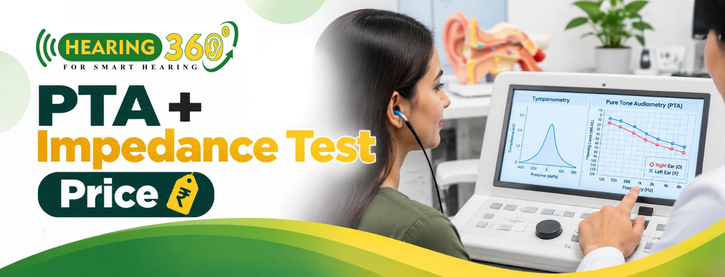
What PTA Measures
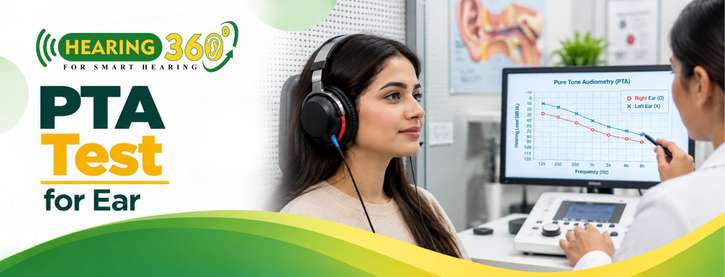
They make you wear headphones and press a button when you hear a tone.
The audiologist records the softest sound you hear at each pitch, in each ear.
- Air-conduction testing sends sound through the ear canal.
- Bone-conduction testing sends sound through a small vibrator behind the ear, where needed.
- The audiogram plots the results and shows the degree of hearing loss.
Comparing air and bone results also helps show if the loss is sensorineural. conductive or mixed.
What Impedance Audiometry Measures
Impedance audiometry is also called tympanometry or acoustic immittance testing.
Clinics use these terms in overlapping ways, so ask what your centre includes. The test records:
- How freely the eardrum moves
- Pressure inside the middle ear
- Acoustic reflexes, when the assessment includes them
The result is a graph called a tympanogram.
Why One Test Cannot Replace the Other
PTA needs your response. Tympanometry mostly does not, because the instrument records how the eardrum behaves.
PTA tells you what you can hear. Tympanometry helps explain the condition of the middle ear. A tympanogram is not a hearing-threshold test, and an audiogram cannot show middle-ear pressure.
What Do Common Tympanometry Results Mean?
Audiologists mainly explain 3 key patterns:
- Type A: Usual pressure and eardrum movement. This will not guarantee usual hearing. The inner-ear hearing loss may still be reflected on the audiogram.
- Type B: A flat trace. It may be linked to fluid behind your eardrum, perforation, or a blocked canal. The volume of the ear canal helps the audiologist tell them apart.
- Type C: Negative middle-ear pressure. It is often linked to Eustachian tube trouble, such as after a cold.
Nobody should read a tympanogram alone. The audiologist or ENT also looks at your PTA thresholds, symptoms, ear examination, and history.
The result will support the diagnosis, but it cannot settle one.
When Are PTA and Impedance Tests Done Together?
Doctors often combine them when one test leaves a question open. Common reasons include:
- The audiogram shows a gap between air and bone conduction
- Hearing feels muffled, blocked, or full
- Ear pressure keeps returning after colds or flights
- Ear infections or fluid keep coming back
- A child seems to hear inconsistently, and the cause is unclear
Here is a simple example. Someone has muffled hearing after a cold. PTA shows a mild loss in the left ear, and tympanometry shows a flat trace on that side.
That pairing points toward a middle-ear cause that the doctor can follow up on. PTA alone would show the loss but not hint at why.
What Does the Visit Look Like?
Most people find both tests easy. Here is the usual order:
- The audiologist checks your ears and explains the tests.
- You wear headphones for PTA and press a button when you hear a tone.
- For tympanometry, a soft probe tip sits at the entrance of the ear canal.
- The device creates a seal and changes the air pressure briefly.
- It records how the eardrum responds and draws the tympanogram.
Neither test is invasive. Tympanometry can cause a short feeling of pressure, and some people find it slightly odd.
Each ear usually takes only a short time, though the total visit depends on the centre and the tests included.
If you are weighing a PTA impedance test price against a PTA-only quote, ask what the extra test gives you.
If you have ear pressure, muffled hearing or repeated ear problems, the middle-ear information is often worth having.
PTA Impedance Test Price: What Changes the Cost?
There is no single fixed fee. Published rates in India vary by city, type of centre, and what is bundled into the appointment.
A number you see online may not match the quote you receive, so treat any “average price” with caution.
Are the Tests Charged Separately?
Some centres list PTA on its own and impedance on its own. Others sell a combined assessment at one rate.
A combined fee can look higher than a single test but may cost less than booking both separately. Compare like with like.
What Does the Appointment Include?
The scope changes the cost. A visit may cover:
- Basic PTA
- Tympanometry
- Acoustic reflex testing
- Speech audiometry
- Extra diagnostic tests, if your audiologist advises them
Where You Test Matters
Diagnostic labs, hearing clinics, hospitals and specialist audiology centres price differently. A lab may quote only the test.
A specialist centre may include an audiologist’s explanation. Neither is automatically better. It depends on what you need from the visit.
PTA, Impedance, or Both?
Your symptoms and your doctor’s advice should guide this.
- You need to measure hearing thresholds: PTA.
- You want to check middle-ear function: tympanometry.
- Ear fullness or recurrent ear problems: tympanometry adds useful context to PTA.
- A full hearing evaluation: the tests are often combined.
If you are unsure, ask your ENT or audiologist which combination fits your situation.
What Should You Ask Before Booking?
A low quote is not always a better deal. Use these questions to compare centres fairly:
- What is the exact test name? Impedance audiometry, tympanometry, and acoustic immittance may not mean the same package everywhere.
- What is included? Ask about PTA, tympanometry, acoustic reflexes, consultation, and the report.
- Are both ears tested? Some quotes cover one ear or a single test setup.
- Who explains the results? One centre may only hand over a printout. Another may explain it and guide next steps.
When you compare a PTA impedance test price across centres, make sure each quote covers the same tests and services. Otherwise, you are comparing different things.
PTA and tympanometry answer different questions. PTA shows how well you hear. Tympanometry adds information about how the middle ear is working.
Used together, they give a clearer picture than either test alone.
That is why the PTA impedance test price should never be judged on the headline fee alone.
Look at which tests are included, whether both ears are tested, and who explains the results.
Need a PTA or impedance audiometry assessment in Kolkata? Hearing 360 Degree provides audiological testing with professional guidance to help you understand which hearing assessments may be relevant to you.
Contact the team to ask about available tests and current pricing.
FAQs
What is the difference between PTA and impedance audiometry?
PTA measures your hearing thresholds, meaning the softest tones you can hear. Impedance audiometry checks middle-ear function, including eardrum movement and pressure. One measures hearing sensitivity, the other measures how the middle ear behaves.
Is tympanometry the same as impedance audiometry?
Tympanometry is the core part of impedance audiometry. Some centres also include acoustic reflex testing under the same name. Ask what your appointment covers.
Can PTA be normal while tympanometry is abnormal?
Yes. The tests measure different things. Some middle-ear changes may not reduce hearing enough to show on an audiogram, so your audiologist still looks at both results together.
How long does a PTA and impedance test take?
It depends on the centre, the tests included and how easily the results come through. Ask the clinic for an estimate when you book instead of relying on a general figure.