
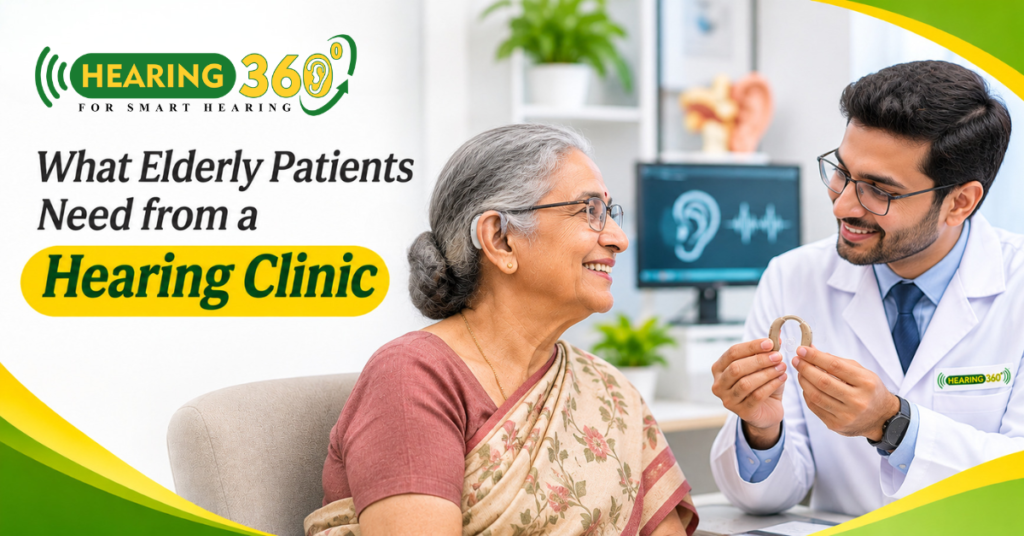
Your grandfather says yes to every phone question, even the ones that need a different answer. A hearing health care clinic can tell you whether age, a blocked ear, a balance problem or something else is the cause.
1 out of 3 adults over the age of 65 suffer from hearing disability.
Older adults need more than a quick hearing check.
They often need hearing tests, balance checks, hearing aid support and sometimes speech care.
Travel is tiring too, so a clinic that covers several needs saves effort.
This guide covers the tests that matter, what makes a hearing aid easy to live with, and when balance or speech care belongs in the picture.
Why Does an Elderly Patient Need a Different Kind of Hearing Health Care Clinic?
Older adults often deal with hearing loss, dizziness and communication problems at the same time.
A good clinic looks at all three. It also considers comfort, hand strength and family support.
A quick hearing check alone often misses part of the picture.
Age-related hearing loss, called presbycusis, usually builds slowly.
It often affects both ears. High-pitched sounds fade first, so speech turns muddy.
The person hears a voice but misses the words. Family gatherings, restaurants and phone calls get hard first.
Signs families notice first
- Turning up the TV again and again
- Asking people to repeat themselves
- Nodding along without following the topic
- Avoiding phone calls, weddings or family meals
- Missing the doorbell or the cooker whistle
- Ringing or buzzing in the ears
- Feeling unsteady or dizzy
Ringing or buzzing deserves its own check. Learn why a normal result can still leave you struggling to hear.
If a first visit worries your parent, read what happens at your first visit.

Small changes that help before the appointment
- Face your parent and keep your face well lit.
- Switch off the TV or fan before you talk.
- Speak clearly at a normal pace. Shouting distorts speech.
- Rephrase instead of repeating the same words.
- Note when the trouble is worst. Share this with the audiologist.
Sudden hearing loss or sudden severe dizziness needs urgent medical attention. Do not wait for a clinic appointment.
Which Tests Does an Elderly Patient Need?
Most older patients start with pure tone, impedance and speech audiometry.
Together they show how much hearing is lost, whether the middle ear works and how well the person understands words.
Balance tests follow when dizziness is a concern.
The audiologist picks the set based on symptoms.
| Test | What it checks | Why it matters for older adults |
| Pure tone audiometry (PTA) | Softest sounds heard at different pitches | Shows the degree and type of hearing loss |
| Impedance audiometry | Eardrum and middle ear function | Rules out fluid or blockage |
| Speech audiometry | How clearly words are understood | Predicts trouble in conversation and guides device choice |
| Eustachian tube function test | Pressure control in the middle ear | Helps explain a blocked or full feeling |
| Eustachian tube function test | Eye movements linked to balance | Helps trace dizziness to the inner ear |
| VNG / ENG | Balance organs in the inner ear | Adds detail when balance problems continue |
| VEMP | Balance organs in the inner ear | Adds detail when balance problems continue |
The report also shows whether the loss is conductive or sensorineural.
That difference shapes the next step.
To see how pure tone and impedance audiometry differ, start there.
A full feeling in the ear may link to blocked ear and Eustachian tube function.
Prepare for test day:
- Bring old reports and a list of current medicines.
- Bring a family member who sees the daily trouble.
- Mention ringing, dizziness, ear pain or past ear surgery.
Who Treats an Elderly Patient: Audiologist, ENT or Speech Therapist?
An audiologist tests hearing and balance and fits hearing aids.
An ENT doctor treats medical and surgical ear problems.
A speech therapist helps with speech, language and voice.
49.8% of people with hearing problems reported hearing only loud sounds.
Many older patients need more than one. A good clinic coordinates and refers when needed.
- Audiologist: Runs the tests, explains the report and manages hearing aids.
- ENT doctor: Checks for infection, ear discharge, pain, wax or sudden one-sided loss.
- Speech therapist: Treats unclear speech, word-finding trouble or a hoarse voice.
Ask for registration with the Rehabilitation Council of India (RCI).
It registers audiologists and speech-language pathologists.
Here is an example. A 75-year-old woman has a muffled ear and dizziness.
The audiologist finds a conductive loss and refers her to an ENT doctor first.
After treatment, she returns for hearing aids. That is good care, not a delay.
An honest clinic sends you onward when the signs point that way. It does not push a device first.
What Should Hearing Aid Support Look Like for Older Adults?
Good support has four parts: a full test first, a trial in real settings, careful fitting and regular follow-up.
For older adults, comfort and ease of use matter as much as sound quality. A device that stays in a drawer helps nobody.
A hearing health care clinic treats the fitting as the start of care, not the end.
Here is what a sound process looks like.
A good process, step by step
- Test first. The diagnosis decides the device, not the other way round.
- Trial more than one model. Try them in a quiet room, a noisy room, on the phone and with the TV.
- Fit and program. The audiologist sets the sound to the person’s hearing pattern.
- Follow up early. Expect adjustment visits in the first weeks.
- Service every year. Digital hearing aids need cleaning and reprogramming at least once a year.
Features that make daily use easier
- Buttons and battery doors that stiff or arthritic fingers can handle
- Simple charging or easy battery changes
- A comfortable fit with no pressure in the ear
- Clear performance on phone calls and TV
- Simple written instructions for the caregiver
Expect an adjustment period. Voices, footsteps and fans sound new at first.
Many people need several visits to settle. Wear time builds slowly.
Tell the audiologist what sounds wrong so they can fine-tune it.
Bring a caregiver to the fitting visit. They learn how to insert, clean and charge the device.
Wipe it daily and store it dry. Kolkata’s humid weather makes dry storage important.
Ask whether a home visit or clinic visit suits your parent for follow-ups. Browse hearing aids only after the test.
Balance Problems and Speech Therapy in Kolkata: What Else Should a Clinic Offer?
Some clinics stop at hearing. Older patients often need more.
Dizziness testing and speech therapy can sit under the same roof. That helps families who find travel hard.
When dizziness needs testing
The inner ear helps control balance. When it misfires, the room may spin while turning in bed or standing up. VNG, ENG and VEMP tests help trace the cause.
Vestibular rehabilitation therapy may follow. It uses repositioning moves and exercises. Some people improve within a few sessions, but this depends on the diagnosis.
Dizziness has many causes, so a medical check still matters.
Speech therapy after a stroke
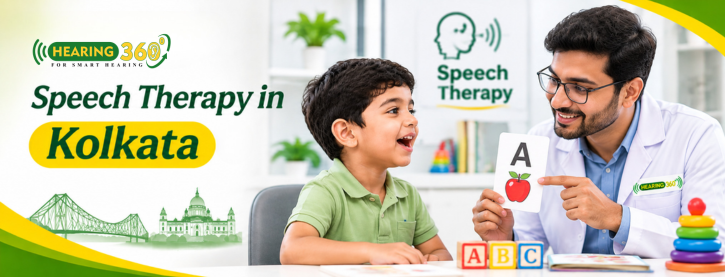
Speech therapy in Kolkata is not only for children.
Adults may need it after a stroke or another neurological condition.
Signs include slurred speech, trouble finding words and a weak or hoarse voice.
Use this short speech therapy guide as a starting point. Therapy usually follows this path:
- Assessment of speech, language and voice
- A personal plan with clear goals
- Regular sessions and home practice
- Progress checks and family guidance
Ask the therapist to show the family how to practise at home. Check the speech therapy sessions on offer. Read about speech therapy cost before you commit.
How to Choose the Best Hearing Clinic for an Elderly Parent
The best hearing clinic has a registered audiologist, a full test range, honest trials, steady follow-up and an easy visit for seniors.
Use this checklist when you compare any hearing health care clinic.
- Credentials: Ask to see RCI registration.
- Diagnosis first: No device advice before testing.
- Real trials: More than one model, tried in daily settings.
- Aftercare: Reprogramming, servicing and repairs.
- Wider care: Balance testing and speech therapy, or a clear referral route.
- Easy access: Ask about steps, lifts, seating and waiting time.
- Clear fees: Ask what the quoted price covers. See why PTA test cost differs between clinics.
- Patience: The audiologist answers questions until you understand.
Clinic visit or home visit?
Home visits help when travel is hard.
Ask which tests the audiologist can do at home and which need the clinic. Compare the options in clinic vs home visit and hearing health care at home.
To see what services a typical care speech and hearing clinic covers, read this overview.
Mistakes to avoid
- Buying a device before testing
- Choosing on price alone
- Skipping follow-up visits
- Expecting perfect hearing on day one
- Deciding for your parent without involving them
Older patients need hearing care that looks at the whole picture.
That means proper tests, a hearing aid that is easy to use, follow-up visits, and support for balance and speech when needed.
The right hearing health care clinic explains each step in plain words and treats your parent with patience.
Book a hearing test for your parent. Visit Hearing 360 Degree and book a free hearing test.
FAQs
How do I know if my elderly parent needs a hearing test?
Watch for repeated requests to repeat, a loud TV, missed phone calls, avoiding gatherings or ringing in the ears. Any of these is reason enough to book a test. Sudden hearing loss needs urgent medical care.
What tests does an older adult usually need at a hearing clinic?
Pure tone, impedance and speech audiometry are the usual starting set. Balance tests such as VNG may follow if dizziness is present. The audiologist decides based on symptoms.
Can a clinic help with dizziness or balance problems in older people?
Yes. Audiologists with vestibular training can run VNG, ENG and VEMP tests and provide vestibular rehabilitation. Dizziness has many causes, so they may also refer you to a doctor.
Does a hearing clinic offer speech therapy for adults after a stroke?
Some do. Speech therapy in Kolkata for adults covers speech clarity, language and voice after a stroke or neurological condition. Ask whether a qualified speech therapist is available and how progress is tracked.
How often should an older person’s hearing aids be serviced?
Digital hearing aids generally need reprogramming and servicing at least once a year. Clean them daily at home. Visit sooner if the sound changes.
Is a home visit as good as a clinic visit for elderly patients?
It depends on the task. Home visits suit follow-ups and patients who cannot travel. Full testing often needs clinic equipment and a quiet room. Ask which parts can be done at home.