
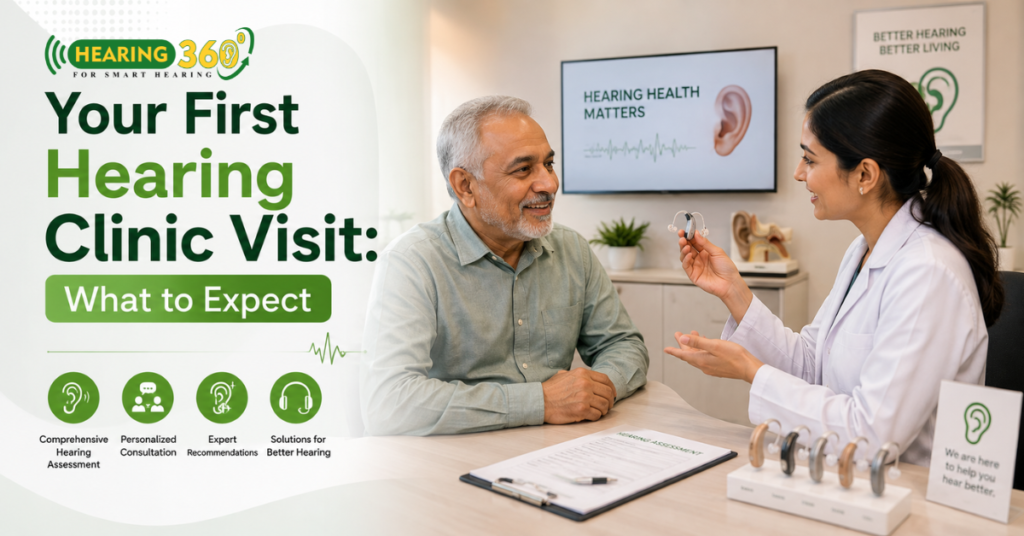
Booked your first appointment at a hearing care clinic and not sure what actually happens once you walk in? You’re not alone. Most people picture a quick test and a device handed over on the spot.
Hearing loss has been estimated at 0.3% in the Indian population. Needless to say, this makes hearing care clinics a necessity. With 63 million people suffering from Significant Auditory Impairment, what experts do during checkups matter more than ever.
The initial diagnosis impacts the rest of the treatment.
The reality is more thoughtful, and knowing what’s coming can make the whole experience far less nerve-wracking.
When Should You Visit a Hearing Care Clinic in Kolkata?
Hearing loss usually creeps up silently. It does not announce itself.Most people are left to adjust without even realising it. Here are a few common signs that should be paid attention to:
-
A ringing or buzzing sound in your ears
-
Asking others to repeat what they said often
-
Finding it difficult to follow through instructions in loud rooms
-
Turning up TV or headphone volume louder than earlier
-
Hearings others’ words as mumbling
-
Trouble hearing properly over phone calls
-
Missing announcements at malls, stations and events
None of this usually comes with pain or a sudden moment of alarm. It builds up slowly, which is exactly why it goes unnoticed for so long.
Family members often notice the change before you do, usually because they’re the ones repeating themselves at the dinner table.
In case this feels familiar, it is important to treat this as a signal rather than ignoring it as some background noise.
Early Hearing Evaluation: Why It Matters
Waiting around does not make it any easier. The longer you keep your hearing problems unchecked, the more your communication suffers, both at the workplace and home.
People tend to check out of conversations without even noticing, just because keeping up can get exhausting.
An early evaluation offers you a clear picture. It shows the degree and pattern of the hearing loss problem and if one ear is affected differently from the other. What online tests offer is a rough idea but they cannot replace an assessment in person. This is where proper equipment and trained judgement do the actual work.
A quiz on your phone can’t measure your hearing thresholds with any real accuracy.
What Can a Hearing Professional Help Identify?
Not all hearing difficulty is the same. It could originate in the outer, middle, or inner ear, and each points to a different next step. Some findings may need further medical review rather than a hearing aid.
A first visit to a hearing care clinic is really about identifying the problem first. Solutions come later, once the picture is clear.
What Happens During Your First Hearing Evaluation?
Initial Consultation and Hearing History
Most appointments start with just a simple conversation and not any test. You should be ready to answer questions like:
-
Does this affect one ear or both?
-
Any previous ear infections experienced or hearing tests conducted?
-
Are you exposed to regular loud noise?
-
When did you notice the difficulty?
-
Do you experience problems in understanding speech or just hearing sounds?
-
Do you experience tinnitus symptoms or any other ear symptoms?
The everyday routine and communication matters here as well. Someone spending long hours on calls may have different requirements than one watching TV at home. This is what decides what gets recommended.
Be honest during this part. The more accurate the picture you give, the more useful your results will be down the line.
Ear Examination and Otoscopy
Next comes a simple physical check using otoscopy, where the specialist looks into your ear canal and at your eardrum. This helps spot earwax build-up, blockages, irritation, or anything unusual.
It’s a quick step, but an important one, since it gives useful context before any testing begins.
Pure Tone Audiometry: Measuring Hearing Sensitivity
This is the test most people picture when they think of a hearing check. You’ll wear headphones and respond when you hear tones at different pitches and volumes, usually with a button press or a raised hand.
Your responses help map out your hearing thresholds, the quietest sounds you can detect at each frequency. These get plotted on a chart called an audiogram, which becomes the reference point for everything discussed afterward.
The process is simple, painless, and doesn’t take long, usually just a few minutes for each ear.
Speech Audiometry and Speech Understanding
Hearing a sound and understanding speech are two different things. In this test, you’ll repeat words or identify them at varying volumes, sometimes with background noise mixed in to mimic real conversations.
It reveals how clearly you process speech, not just whether you can detect noise.
This difference matters when you have to decide which support can help you, as people with similar audiograms may struggle in different ways.
Other Tests You May Need
Depending on your symptoms, a specialist might suggest:
-
Tympanometry, to check how well your middle ear is functioning
-
Bone conduction testing, to determine if the issue is conductive, sensorineural, or a mix of both
Not everyone needs every test. A good clinic tailors the process to your specific situation instead of running through a fixed checklist for every patient who walks in.
What Happens After Your Hearing Test?
Knowing Your Audiogram and Hearing Results
Once you’re done with the testing processes, the specialist guides you through an audiogram, explaining it in simple language rather than showing numbers on a chart.
This shows the hearing threshold across frequencies and stresses on the degree and pattern of hearing problem.
This is not just about your own interpretation. The numbers are meaningful only when they’re viewed with lifestyle, symptoms, and daily communication requirements. Ask any questions you want. A good specialist explains you things twice than leaving you guessing.
When Are Hearing Aids Recommended?
A hearing test alone doesn’t mean hearing aids are next. That decision depends on how much the loss affects daily life. Factors that come into play include:
-
Severity and pattern of hearing loss
-
Whether one or both ears are involved
-
Your work environment and communication demands
-
Social activities and lifestyle
-
Personal comfort with wearing a device
Choosing the Right Hearing Aid for Your Lifestyle
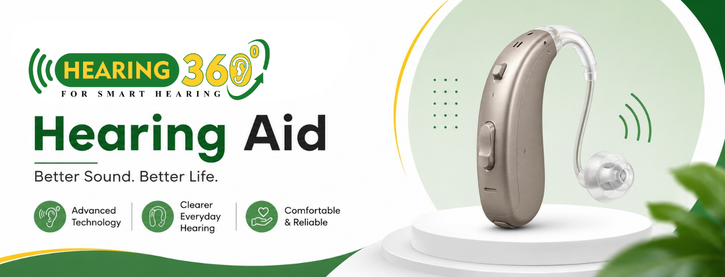
If a hearing aid is recommended, the right one isn’t about brand names or price tags. Options range from behind-the-ear to in-the-ear styles, with features like rechargeable batteries,
Bluetooth connectivity, noise management, directional microphones, and speech enhancement.
More features aren’t automatically better. Someone who mostly stays home doesn’t need the same setup as someone attending meetings or navigating a noisy commute every day. What matters is matching the device to how you actually live and communicate day to day.
Hearing Aid Fitting, Programming and Adjustment
Buying the device is only step one. It then needs to be fitted and programmed to match your specific hearing profile, using your audiogram as the starting point.
When you wear it in real environments, certain settings may need fine-tuning — from comfort, volume or speech clarity in noisy areas. This constant back-and-forth is expected and doesn’t indicate anything wrong.
Why Follow-Up Hearing Care Matters
Hearing needs shift over time, and devices need occasional cleaning, troubleshooting, and performance checks. Regular follow-up visits keep everything working as it should. Good hearing care doesn’t end once you leave with a device.
It’s an ongoing relationship, not a one-time transaction, and the right hearing care clinic in Kolkata will treat it that way, from your first assessment through years of continued support.
If you are looking for a professional hearing care clinic in Kolkata for hearing assessments, hearing aid consultation, fitting, programming, and ongoing hearing support, Hearing Aids Kolkata provides comprehensive hearing-care services tailored to individual needs.
FAQs
1. What happens during the first visit to a hearing care clinic in Kolkata?
Your first visit usually includes a discussion about your hearing concerns, ear examination, hearing tests such as pure tone audiometry, and a review of your results.
2. Is a hearing test painful?
No. Standard hearing tests are painless and non-invasive. You may simply need to respond when you hear different tones or sounds through headphones.
3. Will I need hearing aids after my first hearing test?
Not necessarily. Hearing aids are recommended only when the hearing loss and your daily communication needs indicate that they could be beneficial.
4. How often should I return for hearing care?
Follow-up visits depend on your hearing needs and whether you use hearing aids. Regular checkups can help monitor changes and ensure hearing devices continue to work properly.